
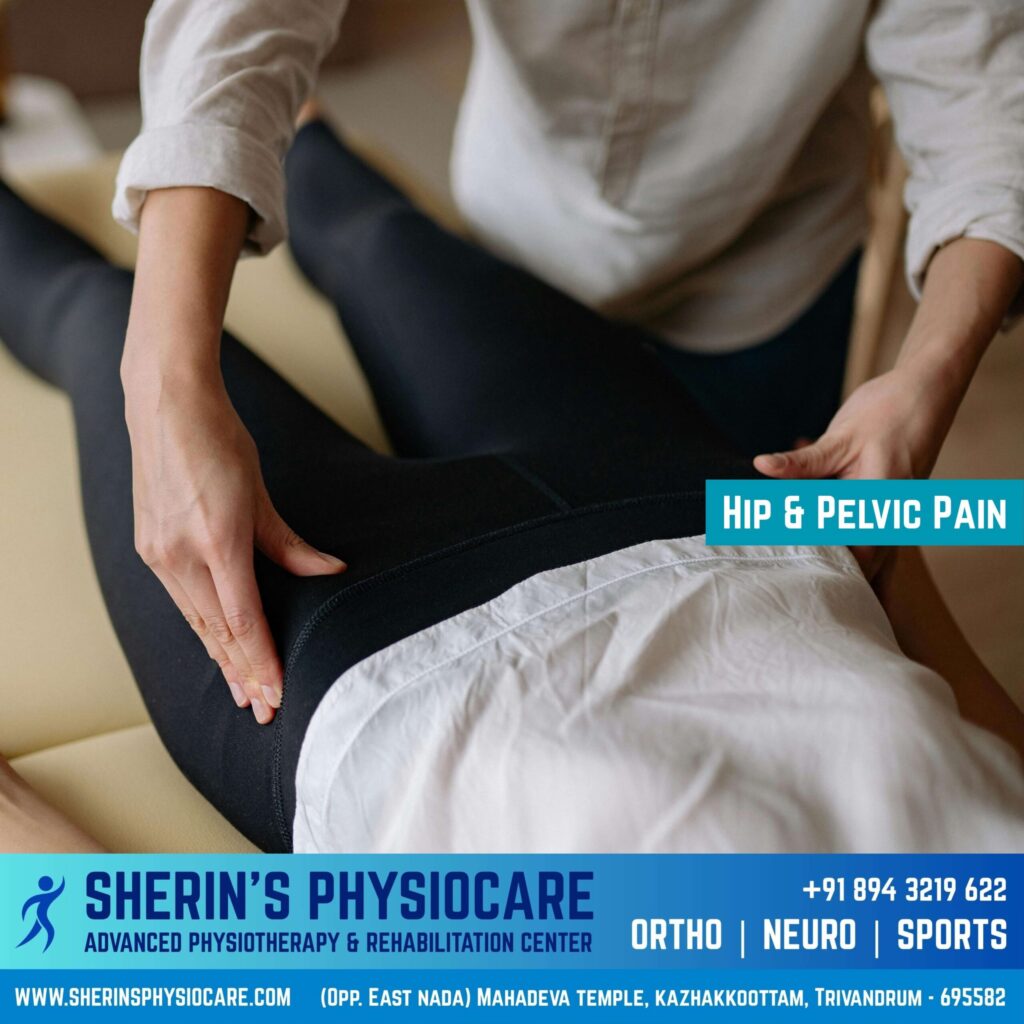
Hip & Pelvis Pain — Causes, Relief & Physiotherapy Treatment
Hip and pelvic pain may result from arthritis, muscle imbalance, or joint dysfunction, affecting mobility and comfort. Physiotherapy aims to reduce pain, enhance joint movement, and improve stability. Through manual therapy, strengthening, and movement retraining, patients regain confidence in walking, sitting, and active living.
Conditions Treated
- Hip Pain / Hip Arthritis
- Piriformis Syndrome / Sciatic Nerve Pain
- Trochanteric Bursitis
- Post Hip Replacement Rehabilitation
- Pelvic Dysfunction / SI Joint Pain
- Groin Strain
- Hip Labral Tear / Impingement
What Causes Hip & Pelvic Pain?
Hip and pelvis pain often arises from joint degeneration, muscle tightness, or nerve irritation. Common causes include hip osteoarthritis, bursitis, labral tear, and sacroiliac joint dysfunction. Muscle imbalance or weakness in the core and gluteal region can also contribute to instability and discomfort. Physiotherapy focuses on identifying the root cause, improving joint alignment, and restoring strength and flexibility.
How Do I Know If My Hip or Pelvic Pain Is Serious?
You should seek professional help if you experience:
- Persistent pain or stiffness around the hip or groin
- Pain radiating to the thigh, buttock, or lower back
- Difficulty walking, climbing stairs, or getting up from sitting
- Clicking or catching sensation in the hip
- Pain after a fall, injury, or surgery
These may signal underlying joint, ligament, or muscular injury requiring expert evaluation.
What Can I Do to Relieve Hip & Pelvic Pain at Home?
You can try these steps to manage mild pain:
- Apply an ice pack for inflammation or heat for muscle tightness
- Avoid prolonged sitting or standing in one position
- Perform gentle stretches for the hip flexors, glutes, and hamstrings
- Sleep with a pillow between your knees to reduce strain
- Maintain proper posture during daily activities
These home measures reduce pressure on the hip and support faster healing.
What Are the Best Exercises for Hip & Pelvic Pain?
Physiotherapy exercises for the hip and pelvis enhance strength, balance, and flexibility. Common examples include:
- Bridging: Activates gluteal muscles and stabilizes the pelvis
- Clamshell exercise: Strengthens hip abductors
- Hip flexor stretch: Reduces tightness in the front of the hip
- Pelvic tilt: Improves lower back and core control
Exercises are customized according to pain source and mobility level for safe recovery.
When Should I See a Physiotherapist for Hip or Pelvic Pain?
If pain interferes with walking, sleeping, or exercising, consult a physiotherapist. Early physiotherapy intervention helps prevent chronic stiffness, improves alignment, and supports post-surgical rehabilitation to restore pain-free movement and balance.