
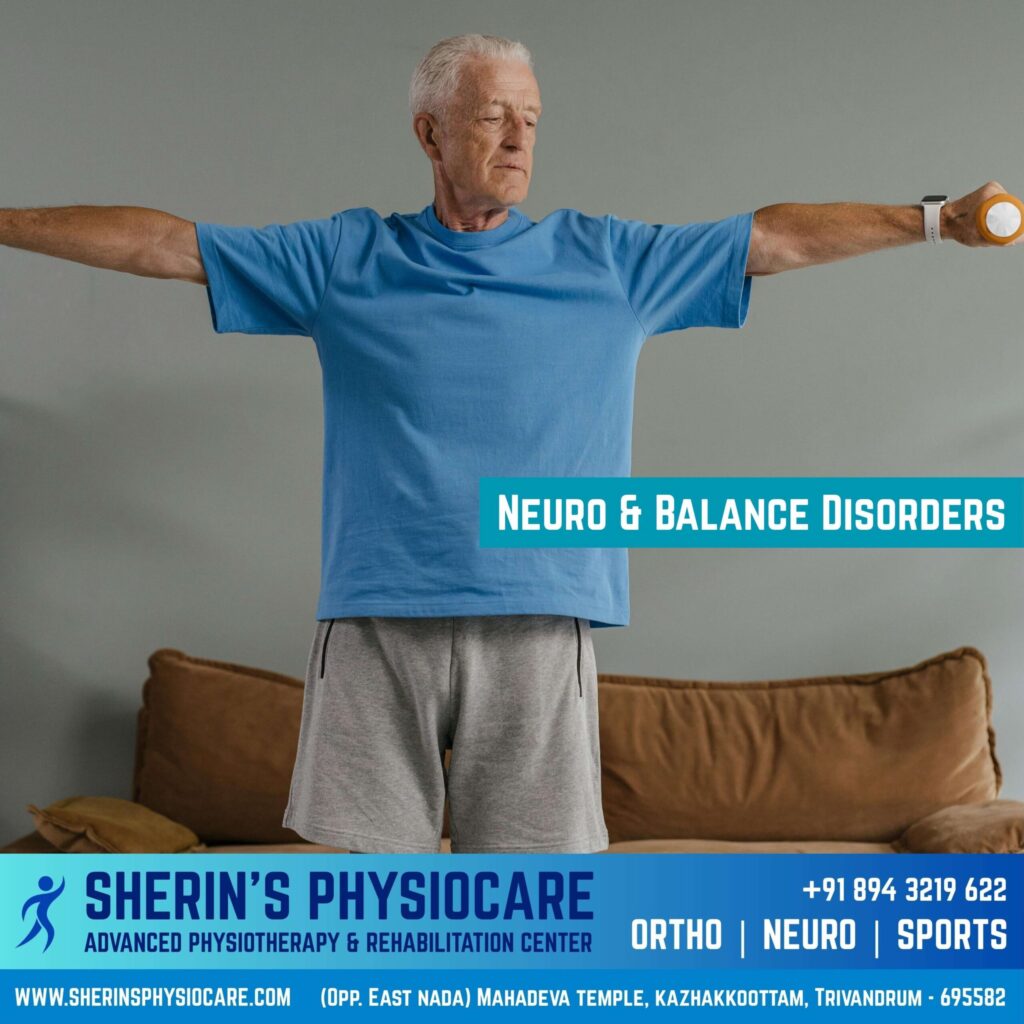
Neurological & Balance Disorders — Physiotherapy for Recovery & Stability
Neurological conditions like stroke or Parkinson’s can affect movement, balance, and coordination. Physiotherapy focuses on retraining muscles, improving mobility, and enhancing confidence in daily activities. Personalized neuro-rehab programs promote independence, functional recovery, and a better quality of life.
Conditions Treated
- Stroke / Hemiplegia Rehabilitation
- Parkinson’s Disease
- Neuropathy / Nerve Injuries
- Balance Disorders / Vertigo / Vestibular Issues
- Gait Training & Mobility Issues
- Spinal Cord Injury Rehabilitation
- Multiple Sclerosis (MS)
- Cerebral Palsy (for pediatric patients)
What Causes Neurological & Balance Disorders?
Neurological conditions such as stroke, Parkinson’s disease, multiple sclerosis (MS), or neuropathy can impair nerve function and muscle control. Inner ear issues (vestibular disorders) may also lead to dizziness and imbalance. Injury to the spinal cord or peripheral nerves can disrupt the brain-body connection, affecting posture and stability. Physiotherapy focuses on retraining the nervous system to regain control and coordination.
How Do I Know If It’s Serious?
You should seek physiotherapy evaluation if you experience:
- Loss of balance or frequent falls
- Weakness or stiffness in limbs
- Tremors or involuntary movements
- Dizziness or vertigo
- Numbness, tingling, or poor coordination
These symptoms often indicate neurological dysfunction that benefits from early, structured rehabilitation.
What Can I Do to Improve Balance at Home?
For mild imbalance or early recovery:
- Practice standing near a stable surface and gently shifting weight side-to-side
- Try heel-to-toe walking to improve gait stability
- Use core strengthening exercises like bridges or seated marches
- Focus on slow, controlled movements to enhance body awareness
Avoid sudden position changes or walking on uneven surfaces until balance improves.
What Are the Best Physiotherapy Exercises for Neurological & Balance Disorders?
Physiotherapists use evidence-based neuro-rehabilitation techniques:
- Balance training using wobble boards or foam pads
- Gait re-education for smoother walking patterns
- Proprioceptive and coordination drills to retrain the nervous system
- Strengthening and stretching programs for muscle tone control
- Vestibular exercises for dizziness and spatial awareness
These therapies improve stability, muscle control, and confidence in movement.
When Should I See a Physiotherapist for Neurological or Balance Issues?
If you notice progressive unsteadiness, weakness, or recovery challenges after a neurological event, seek physiotherapy early. Consistent rehab accelerates functional recovery, reduces fall risk, and enhances independence in daily life.